




DNA in Modern Science : an Applications.

The discovery of DNA’s structure as a double helix by James Watson, Francis Crick, Rosalind Franklin, and Maurice Wilkins in 1953 marked a pivotal moment in science. This breakthrough unveiled the molecular basis of heredity, fundamentally altering our understanding of life and catalyzing advancements across multiple disciplines. The understanding of DNA’s structure has revolutionized numerous…
Read More

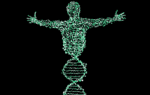
DNA: The Blueprint of Life

Deoxyribonucleic acid (DNA) is the fundamental molecule that carries the genetic instructions for building all living organisms. Often referred to as the “blueprint of life,” DNA encodes the information necessary for the development, functioning, and reproduction of organisms, from the simplest bacteria to complex multicellular beings like humans. What is DNA? DNA is a long…

Read More

The History of the First Organ Transplant: A Medical Milestone

The advent of organ transplantation marked a transformative epoch in medical science, redefining possibilities for treating end-stage organ failure. This report explores the historical trajectory of the first organ transplant, highlighting key milestones, scientific contributions, and societal impacts, culminating in the first successful procedure in 1954. Historical ContextThe concept of tissue transplantation dates to ancient…

Read More

The 30 Most Influential Biologists in History and Their Groundbreaking Discoveries

Biology has been shaped by brilliant minds whose discoveries revolutionized medicine, genetics, ecology, and our understanding of life itself. Biology has been revolutionized by scientists whose discoveries have deepened our understanding of life’s processes. This article details the contributions of 30 renowned biologists, providing in-depth insights into their research, methodologies, and the broader impact of…

Read More

Scientific Methodology and Technological Breakthroughs of the Human Genome Project

The Human Genome Project (HGP), launched in 1990 and completed in 2003, was a landmark scientific endeavor that required innovative methodologies and technological advancements to map and sequence the approximately 3 billion base pairs of the human genome. Below is a detailed exploration of the scientific methodologies employed and the technological breakthroughs that enabled the…

Read More

The Great Barrier Reef: A Microcosmic Marvel in Peril

the Great Barrier Reef, expanded with even more granular details and recent research findings. It’s structured to provide a comprehensive, almost encyclopedic dive into the subject, Spanning over 2,300 kilometers (1,429 miles) along Queensland’s northeastern coast in Australia, the Great Barrier Reef is Earth’s largest coral reef system, encompassing 2,911 individual reefs and 917 islands….

Read More

Microscope – an idea of observing micro world

Microscopes are essential instruments in scientific research, allowing us to observe structures and organisms invisible to the naked eye. Their development has revolutionized fields such as biology, medicine, material science, and nanotechnology. This article explores the history, types, advancements, and significance of microscopes in detail. 1. History and Development of the Microscope The invention of…

Read More

discovery of Bacteriophage

Early Discovery and History Bacteriophages, commonly known as phages, are viruses that specifically infect and destroy bacteria. Their discovery dates back to the late 19th and early 20th centuries. In 1896, British bacteriologist Ernest Hanbury Hankin noticed an antibacterial agent in the waters of the Ganges and Yamuna rivers that could eliminate Vibrio cholerae. This…

Read More