





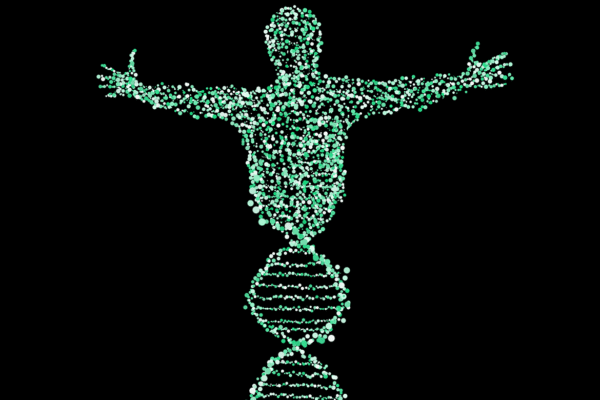
DNA in Modern Science : an Applications.

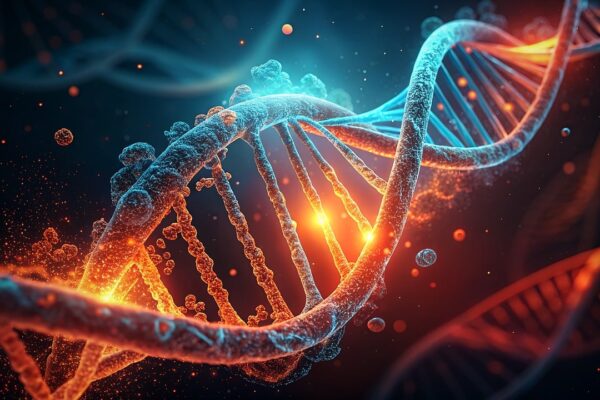
The discovery of DNA’s structure as a double helix by James Watson, Francis Crick, Rosalind Franklin, and Maurice Wilkins in 1953 marked a pivotal moment in science. This breakthrough unveiled the molecular basis of heredity, fundamentally altering our understanding of life and catalyzing advancements across multiple disciplines. The understanding of DNA’s structure has revolutionized numerous…
Read More

DNA: The Blueprint of Life

Deoxyribonucleic acid (DNA) is the fundamental molecule that carries the genetic instructions for building all living organisms. Often referred to as the “blueprint of life,” DNA encodes the information necessary for the development, functioning, and reproduction of organisms, from the simplest bacteria to complex multicellular beings like humans. What is DNA? DNA is a long…

Read More

Neurotechnology: Merging Mind and Machine

Neurotechnology refers to technologies that interact with the nervous system to monitor, modulate, repair, or enhance its functions. It integrates neuroscience, engineering, and computer science to develop tools such as brain-computer interfaces (BCIs), neuroimaging systems, neurostimulation devices, and neural prosthetics. These innovations aim to understand brain activity, treat neurological disorders, restore lost functions, and potentially…

Read More

The DIRE Wolf: A Breakthrough in De-Extinction or a Conservation Controversy?

In April 2025, the world was abuzz with news of the “DIRE Wolf”—a term that has emerged in public discourse to describe the genetically engineered dire wolf pups created by Colossal Biosciences, a Dallas-based biotechnology company. The announcement of three dire wolf pups, named Romulus, Remus, and Khaleesi, marked a significant milestone in the field…

Read More

Disorders that can be inherited caused by abnormalities in DNA.

Cataloging every genetic disorder with detailed information is a monumental task, as over 10,000 genetic disorders have been identified in humans alone, with thousands more in animals. Many are rare, poorly understood, or lack comprehensive documentation. So What is Genetics? Genetics is the branch of biology that studies genes, heredity, and genetic variation in living organisms. It explains…

Read More

Human Genome Project : mapping and sequencing the entire human genome

The Human Genome Project (HGP) was an international scientific research initiative aimed at mapping and sequencing the entire human genome, the complete set of DNA within a human cell. Launched in 1990 and Completed in 2003, it provided the first full blueprint of human DNA, revolutionizing biology, medicine, and biotechnology, the HGP was a collaborative effort…

Read More

CRISPR : tools to edit DNA (Targeted Genome Sequencing in Functional Genomics)

CRISPR is a natural defense system found in bacteria. Scientists adapted it to edit DNA in a precise, cheap, and efficient way. What is CRISPR? CRISPR stands for Clustered Regularly Interspaced Short Palindromic Repeats. It’s a naturally occurring defense mechanism in bacteria that protects them from viruses. Bacteria store snippets of viral DNA in their…

Read More

Hello world!

Welcome to The Hall of Great Ideas & Discoveries! Explore the most groundbreaking ideas, inventions, and discoveries that have shaped our world. From ancient wisdom to modern breakthroughs, this platform is a celebration of human curiosity, creativity, and knowledge. 🚀 Inspiration Awaits – Dive into the stories of brilliant minds, explore scientific wonders, and uncover…

Read More